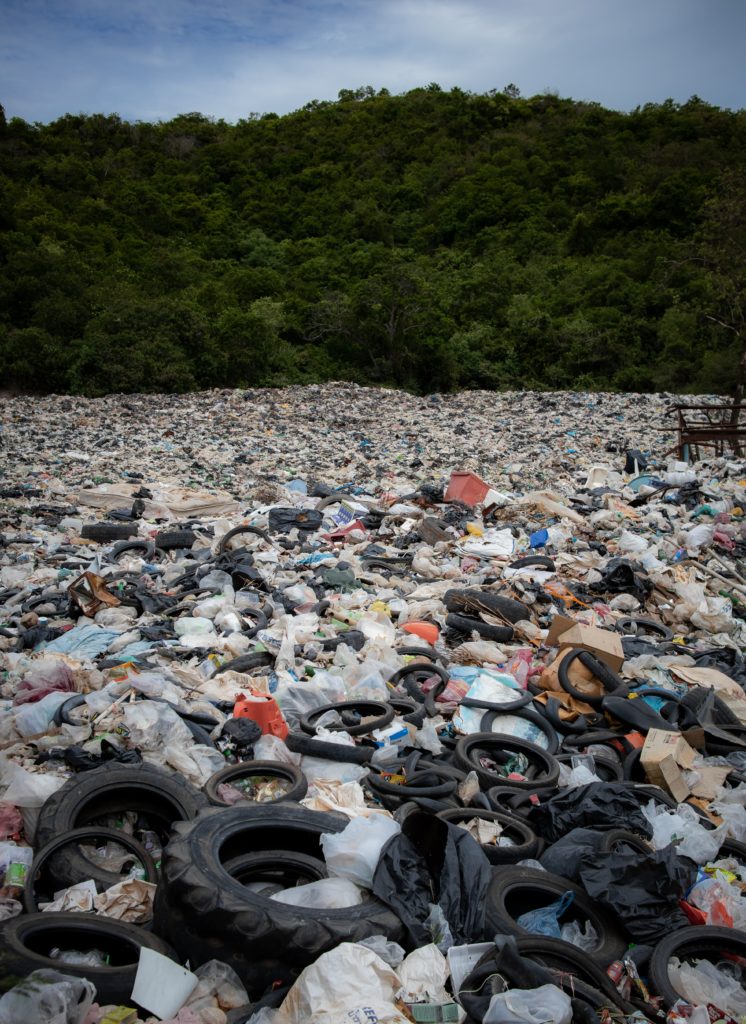
The alternative waste management for recycling and composting is landfills and incinerators. On average, 44% of municipal solid waste (MSW) sent to landfills could have been recycled, and recyclable and compostable materials comprise 83% of landfill waste (EPA). Landfills require vast amounts of land to collect our waste. Incinerators and landfills also require lots of energy to transport and manage our trash while producing harmful greenhouse gases, which negatively affect our environment. Recycling and composting gives us the potential to reduce landfill waste significantly.
Landfills and incinerators, the alternatives for recycling and composting, produce toxic emissions and wastewater that pollute the surrounding area’s air and groundwater. The harmful toxins in these byproducts harm the health of the surrounding community, causing respiratory diseases and other infectious diseases such as typhoid and dysentery. Recycling waste instead of sending it to landfills and incinerators reduces the negative health impacts by reducing the amount of harmful toxins released into the surrounding environment.
Recycling saves significant amounts of energy that would be used on harvesting new materials. Creating products from recycled metals use only 5% of the energy that would be used to create the same product from raw metals (Recycle MI). Recycling as little as 10 plastic bottles saves enough energy that could power a laptop for 25 hours (EPA).
 Recycling allows us to reduce the amount of waste sent to landfills, which require vast amounts of land to contain the waste, and the amount of waste released into the oceans. When we recycle and create less waste to send away to our garbage companies, less habitat is needed to store the waste collected, resulting in less habitat displacement.
Recycling materials allows for new products to made of already-harvested materials, allowing us to conserve more of the unharvested natural resources. This allows allows us to conserve the energy required to extract new materials.
Landfills and incinerators, the alternatives for recycling and composting, produce toxic emissions and wastewater that pollute the surrounding area’s air and groundwater. Recycling waste instead of sending it to landfills and incinerators reduces the amount of harmful emissions and leakage released because there is less material available to create the emissions and leakage.
In 2018, recycling activities accounted for 681,000 jobs (REI Report).